Citizens Alliance for Better Candidates - 703-338-0200
More Trains - Less Traffic!
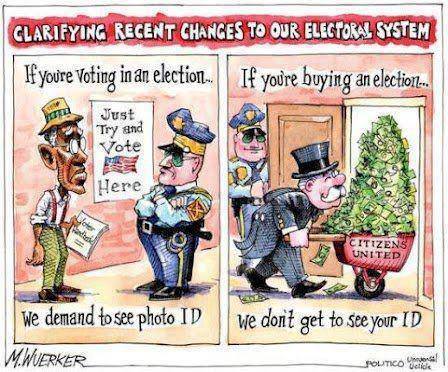
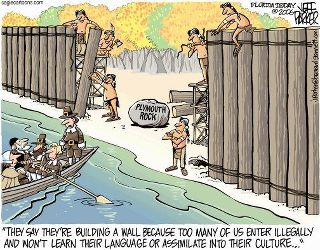
There is no shortage of reasons why we need you to run for office! These illustrations say it loudly.
No train traveling on 19th century rail technology in the US goes faster than 100 mph. Quite embarrassing for a country
that prided itself on innovation and technological prowess. Modern magnetic levitation rail systems (Maglev) around the globe are approaching 400 mph.
This impediment is caused by the stalemate in our electoral system which produces nothing but tribal friction disguised as political differentiation. The resulting outcome: a very dysfunctional
governing system.
The only way to innovate governing is to upend
the current political tyranny, and release those inspired to serve to do so in a free and innovative manner.
Legislating will only improve when we can seriously diminish the outsized
influence of money, and the extremist control of election outcomes most visibly noticed in the primary election process where
only 10% of voters decide over 80% of the general election outcomes.
Here is an excerpt from a 2019 interview
with Dr. Jill
Stein.
10/19/19Dr. Jill Stein answers HRC’s charge … “And that’s assuming Jill Stein will give it up, which
she might not because she is also a Russian agent.Jill answers, “This is a completely unhinged conspiracy
theory for which there is no basis in fact.It’s really outrageous that Hillary Clinton is trying
to promote this crazy idea.You can’t just slander people, you have to present some basis in fact.I am not running for office, so it is preposterous to say “if I would give it up.”It’s
a wild and insulting theory and I think it speaks to Hillary’s need to try to explain, perhaps to herself, why her campaign
was not successful.People really wanted change and unfortunately believed Donald Trump’s lies that
he was going to bring change.We need a voting system in which people can actually vote for what they want
and if people are concerned that independent candidates and campaigns are Russian plots, there is a very simple solution:
Rank Choice Voting prevents any evil, foreign asset or anyone from splitting the vote.It lets you rank
your choices.You never have to worry about your vote being (quote) thrown away or your vote not counting
or spoiling the election.It doesn’t happen under rank choice voting.If your
first choice loses, your vote is automatically reassigned to your second choice.It’s a win-win.And that’s the solution here.The solution is not to silence political dissent.You know the basis of our democracy is supposed to be political dialogue and competition.We shouldn’t
be in the business of throwing terrible accusations and calling tyranny and traitor for people who are standing up for very
important values that the American people badly need to hear about.You know 70% in a recent Wall Street
Journal poll, 70% of Americans said they are not just fed up, they are fighting angry with a political establishment that’s
thrown them under the bus.So we shouldn’t be in the business of silencing diverse political choices.We need Rank Choice Voting to make that okay and bring our values back into our vote.
(Stein, CNN): “We need
to get the 42% that didn’t participate into the game, instead of concentrating on those who earnestly get into the arena.”
View 2023 Jill Stein interview below as she seeks the Green party nomination
for the third time.
(Also hear from
Dr. Cornell West in 2023 below...)
Other reasons to run:
1) You have better policy positions that need to be advocated than those who are bought and paid for by
the lobby community.
2) Even with the semblance of a two-party system, nearly 50% of the elected positions have no challengers
and the current electoral systems are unfairly skewed against outside participants. After a very carefully crafted gerrymandered
redistricting process in South Carolina, the majority party ensured their continued dominance by reducing the number of
challengers. For the 2022 South Carolina State House of Representatives, 72 out of 124 seats had NO major party opposition. That is embarrassing and something that only V. Putin should be proud of.
3) The
primary system is wrecking our democracy.The 10% extremists in each party have an outsized influence on
the outcome of the general elections.
Act now to prepare to get on the ballot in 2024 and beyond.
It requires planning and carefully designing a strategy to run or even stand* for public office.
Our team stands ready to help you
prepare - whether it is honing your personal skills, developing a fundraising operation, gathering supporters or conducting
a field operation.
Contact Independent Green Party of Virginia Co-Founder and Former Chairman Joseph Oddo, now at (703) 338-0200
*Running for office is more involved,
but standing for office is still a great value to our country.
You don't protest, so you think the Public Order Bill - the most
repressive legislation of the modern era - doesn't affect you? If so, I'm sorry to say that you couldn't be
more wrong. *Please* watch this. You need to know. pic.twitter.com/xYmAUwOzZK
Paying tribute to one of the all-time great civic leaders: Capt Ron Fisher (USN) d. 10/31/23
Join
our team of Citizen Advisers...
Contact
us at 703-338-0200.
Rail Now Coalition Members!
Dr. Jill Stein
Terry
Modglin
Gail for Rail Parker
Dianne
Blais
Albert Burckard
Carey
Campbell
Joseph Oddo
Corazon
Foley
Erica Lawler
Brooklyn
Kinlay
David Lambert
Elaine
Hildebrandt
Dr. Ken Hildebrandt
Col.
Jim Leslie, USMC
Marisa Wissar
Dianne
Blais
Peter Marchetti
Dr.
Katherine Pettigrew, Phd
Janet Murphy
Tareq Salahi
Honorary:
Petra Kelly
---
Independent Green Party Co-Founder. Statesman. Professor George R. "Tex"
Wood, Independent Green Party Co-Founder
Virginia and America has lost an
Independent Green Party patriot
Dedication by Carey Campbell
Professor George R. “Tex” Wood (73) Independent Green Party (IG) co-founder, IG 9th Congressional
District Chairman, state central committee member has passed.
Tex Wood was burned in a January (2020) accident and died from complications.
Tex
was a true southern gentleman, and lifelong civil rights, and ballot access advocate. Tex was a U.S. Marine Corps, Vietnam
Veteran. Tex ran as a Reform Party candidate for US House of Representatives.
Tex joined the Green Party and co-founded the Independent Green Party of Virginia. According
to Ballot Access News, Tex Wood’s Independent Green Party became the most active on ballot third party in Virginia in
100 years.
Tex Wood was one the nation’s,
and Virginia’s foremost fighter in the courts, and on the streets for Ballot Access.
Every American, especially Virginian benefits from Tex Wood’s success at lowering
signature petition requirements for Independent and Green Party candidates.
Tex Wood passing leaves a great void in our body politic for Independent Green Party
reformers.
Tex Wood was irreplaceable:
fun, funny, witty, insightful, wise, quick with a charming quip. Tex could win every debate while bringing waves of laughter.
The Independent Green Party of Virginia
was built on Tex Wood’s knowledge, experience, and wisdom. Along with his great good humor, Tex’s humility endeared
him to us all.
Professor Tex Wood
taught English and Literature. Tex liked Shakespeare. The bards words describe our dear Tex Wood.
“...Some are born great, some have greatness thrust upon
them...”
For us, who knew and
loved him, our Independent Green Party leader Tex Wood was truly a great person. We knew Tex Woods greatness in so many ways
and times.
Sleep well, and in peace
our dear Green Prince.
Tex, You live
on in our state and nations improved civil life you bequeathed to generations to come.
Mergers & Acquisition Advisor, Writer, Political Campaign
Director
Four-time
ballot certified candidate for congress.
After 20 years in
retail management and launching sales transitions to e-Commerce, Joe Oddo switched back to his college studies to create
a writing and political/sales consulting practice in 2002. He is a four-time ballot certified candidate for congress (Virginia
2004-08, South Carolina 2022), and founder of a number of political advocacy organizations. A Public Policy major from Penn
State, Oddo volunteers as DJ at public radio WTJU, was volunteer host on GreenTV public television, and a Friend of the
Library. In SC, he teamed up with Better Ballot SC to advocate for Instant Runoff/Ranked Choice Voting. Currently he is the
South Carolina Managing Director for Neumann Associates M&A Advisors.
"I have blessed to being able to conduct three distinctive careers over the course
of the last 45 years: Writing / Business Management / Political Campaign Management.
"Having run for office on numerous occasions, I coordinated statewide ballot access drives, and directed
campaign operations for at least ten candidates running for federal, state and local office.Have served
as founder, director, organizer, fund-raiser, policy writer, media relations and press coordinator, as well as candidate surrogate.
"If you even remotely consider running for office, please reach out to me. Let’s have a conversation!"
Blog Posts:
March 19, 2024
A Dozen Articles That Reveal Big Party Fears of the Independent Voter
From March 2024... WaPo:
Biden allies form new group to coordinate attacks on third-party
candidates
The Clear Choice super PAC is another arm in the unfurling Democratic-aligned machine to
tamp down any candidate who could divide the anti-Trump coalition
By Michael Scherer
March 14, 2024
Allies
of President Biden have formed a super PAC called Clear Choice, aimed at stopping any third-party or independent candidates
from gaining traction before the November election.
The group will develop research, test messages and push storylines
in the media aimed at dissuading voters from supporting campaigns spearheaded by attorney Robert F. Kennedy Jr., academic
activist Cornel West, groups like No Labels and other third parties, said Clear Choice’s founder, Pete Kavanaugh, a
strategist who served as deputy campaign manager in Biden’s 2020 presidential campaign.
The group is expected
to take on a coordinating role among outside groups who are working on similar efforts, including the opposition research
group American Bridge 21st Century and the moderate Democratic group Third Way, which has been leading the effort against
No Labels. No decision has been made on whether the group will engage in major paid advertising efforts.
“It’s
imperative that this election is a clear choice between President Biden and Donald Trump. No third-party or independent candidate
has any chance of winning a state in November, never mind reaching 270 electoral votes,” Kavanaugh said in a statement.
“They are spoilers, plain and simple. We’re here to work with allies to ensure those candidates are held accountable,
and everything is on the table.”
Democrats have been alarmed this year by the apparent strength of third-party
and independent campaigns in polls that test their names against Biden and his presumptive rival, former president Donald
Trump. In a five-way contest, Kennedy, West and Green Party contender Jill Stein were supported by 13 percent of voters in
a recent Suffolk-USA Today poll. A Fox News poll last week showed the three getting 18 percent of the vote.
The Democratic
National Committee has appointed a dedicated team to focus on the issue, with veteran party leader Mary Beth Cahill serving
as the senior adviser, strategist Lis Smith as a communications adviser and Ramsey Reid overseeing the day-to-day.
Another
recently formed group called Citizens to Save Our Republic, led by former House minority leader Richard A. Gephardt (D-Mo.),
has run a few ads to draw attention to the issue. The group has also called on all third-party candidates to sign a pledge
to leave the race in six swing states by July 1 if they have not qualified in enough states to win the electoral college and
have not polled competitively.
At the same time, Third Way has been running a broad effort against No Labels, aimed
primarily at dissuading potential candidates from joining that effort. No Labels is expected to announce a committee to choose
its candidates Thursday, with an announcement of the full ticket to be made no later than early April, if the group decides
to move forward.
“We have been warning for more than a year about the threat that third-party candidates play
in serving as a spoiler for Trump,” said Matt Bennett, Third Way’s vice president for public affairs. “We
have been gratified to work with an extraordinary coalition of groups and we are happy to have Clear Choice involved in the
fight.”
Pat Dennis, the president of American Bridge, also welcomed the new group.
“Clear Choice is
an important partner here,” Dennis said.
1/23/23 Better Ballot SC Rally on Capital Steps, Columbia, SC.
Joe Oddo speech transcript…
Thomas Jefferson once said “A little rebellion, now and
then, is a good thing, and as necessary in the political world as storms in the physical.” I don’t think he
meant getting to this place - where confrontation and paralysis have become divided government’s natural state.
Deep polarization
of the parties has made it harder to achieve bipartisan agreement. This is not the republic that our forefathers envisioned.
Polarization is not new. What was once intra-party disagreement has morphed into tribalism. What was once cross-party coalitions
are now dangerous levels of stalemate and dysfunction.
The upcoming debt ceiling fight
is the perfect example. Nothing but a strange booby trap, the debt ceiling severs Congress’s decision to spend money,
from its decision to pay its bills. Getting rid of it would bombproof the government’s operations against political
disaster. Debt ceiling bills have always been used to embarrass the other side. It’s like leaving a cocked gun for
reckless legislators to hold their country hostage until they get what they want. That just wasn’t how things were
done in American politics before.
Norms of cooperation and deference have given way to crises, paralysis,
and polarization. Political actors have to be responsive to the conflict amplifying media. Instead of routine bickering,
media-hungry politicians thrive on a full-blown crises. It’s theater at its worst. There are other ways legislators
can express their views, gain leverage, and grandstand that don’t threaten to tank the economy.
Political
scholars have identified two basic norms that have been destroyed: mutual toleration, or the understanding
that competing parties accept one another as legitimate rivals; and forbearance, resisting the temptation
to use temporary legislative control to maximum partisan advantage. We see it right here in this state house. Gerrymandering
provided the majority the opportunity to draw districts where 72 of 124 seats did not even have a major party challenger.
And power, of course, begets power. The majority party intends to pass even more partisan measures that will cripple our
schools, restrict voting, and threaten women’s rights.
Modern polarization
is rooted in the civil rights era. One Party chose to embrace racial equality. The other Party provided a home to white
backlash. Political scientists Ornstein and Mann see a party seizing on its majority to:
--
become ideologically extreme;
-- contemptuous of the inherited social and economic policy regime;
-- scornful of compromise;
-- unpersuaded by conventional
understanding of facts, evidence and science; and
-- dismissive of the legitimacy
of its political opposition, all but declaring war on the government.
So-called smaller
government conservatives sell out for a ‘win at all costs’ methodology. An identity group under threat, they
promise their loyal voters protection and victories. In turn, their followers follow them to hell and back. Overspending
and big government concerns are brushed aside as long as they’re fighting against illegal immigration and pushing
back against the left.
Because white conservatives realize they are in a narrow, rapidly
diminishing majority, they uniformly select a boogieman: the Left. They pour out one-liners that speak volumes of what they
oppose: ObamaCare, Hillary, Critical Race Theory, Woke Culture. Notice none of these state what they are for.
So we are here to remind this supermajority that the people are watching. We are gathered here to offer
a resolution to our troubled political structure. We seek to build a coalition that brings together groups with dissimilar
– even opposing – views on many issues. We don’t want to coalesce just with our friends, but with our adversaries.
An effective coalition in defense of American democracy requires that unnatural allies - moderates and progressives - forge
alliances with business executives, religious leaders, and Red-state Republicans. Business leaders have good reasons to
oppose unstable, rule-breaking politicians who threaten to tank the global economy.
Let’s
begin a dialogue about ranked-choice voting, voters could choose their favorite candidates in order. The least popular candidate
would be eliminated, and her voters would see their second choice counted. So even if your favorite candidate loses, your
vote still counts. You don’t have to live in a swing district for your vote to matter.
RCV
creates more positive discourse among candidates who tend to form alliances with their adversaries rather than throw mud.
Their appeal to voters, “hey, if you can’t pick me first, pick me second.”
Many
people actually thought that a victory of extreme polarization would rescue democracy. Even after a shock of orange hair,
a cardiovascular system and a twitter account, the weakened, but still effective checks and balances provided soft guardrails
of democracy. These guardrails barely held during the presidency of the wannabe autocrat despite his attempts to weaponize
the courts, usurp the media and rewrite the rules of politics to tilt the field against opponents.
Democracy
is a shared enterprise. Its fate depends on all of us. Politicians don’t lead. They follow. I invite you to join our
Better Ballot coalition. When outside forces demand change, then and only then do politicians get down to business of making
changes.
Get involved in your community. Take Action Against Apathy. Run for office. Stop
wasting your vote on a political system stuck in quicksand. Demand accountability!
Reviewing "Democracy's Data: The Hidden Stories
in the U.S. Census and How to Read Them" by Dan Bouk
I spent 18 months
on the inside of the micro-managed US Census project. We covered Albemarle and each county surrounding it. In all that time,
I had little thought of the macro-picture of the Census and its multi-faceted applications. None of those occurred to me until
I read Dan's Democracy Data book.
It was quite interesting to see the machinations that went on behind
the scenes. The politically powerful had tried every ten year cycle to influence the outcome by dictating the inputs. Despite
getting to influence who conducted the Census by appointing their favorite partisans, they did not really have much control
on the outcome.
Dan argues that in one of the last years that a complete physical canvass was conducted, it
proceeded to generate a very small margin of error. But with the advancement of the modern digital world, we may never see
such accuracy again.
Dan's best contribution was turning the boring side of data into lively, relevant
information.
Inside Mississippi’s only class on critical race theory
As Republican lawmakers push to ban critical race theory, here’s how the class changed the
mind of one conservative Mississippian.
by Molly Minta February 2, 2022
Students Brittany Murphree (left) and Teresa Jones, outside the Khayat Law Center where they
take a Critical Race Theory course at Ole Miss, Thursday, Jan. 27, 2022. Credit: Vickie D. King/Mississippi Today
Brittany Murphree was born and raised in Rankin County, Mississippi, one of the most Republican counties in one of the most
Republican states.
She went to Northwest Rankin High School where she was the president of the school’s
chapter of Teenage Republicans of Mississippi. She interned for Republican Gov. Phil Bryant, and her parents voted for Donald
Trump twice (she did too, one time). At the University of Mississippi Law School, where Murphree is now in her second year,
her friends are mostly conservative white people. Care about Mississippi issues? Stay informed daily.
In early
January, Murphree shocked them all when she announced that one of the courses she was taking this semester was “Law
743: Critical Race Theory.”
“Why would you take that class?” her dad vented on the phone. “It’s
the most ridiculous concept.”
“Brittany, that class is just gonna make you feel so guilty about being
white,” some of her classmates warned.
“You’re gonna get canceled.”
Their
tone was teasing, but Murphree thought they sounded genuinely worried. She understood why. Critical race theory had become
a flashpoint of national politics in 2021 as conservative media latched onto the term, deeming it “hostile, academic,
divisive, race-obsessed, poisonous, elitist, anti-American.” In speeches, both House Speaker Philip Gunn and Gov. Tate
Reeves had vowed to ban the theory from being taught in schools. Murphree didn’t know much about critical race theory,
but she knew some people in Mississippi thought it was taboo.
Still, Murphree wanted to know what the “hotly
debated topic” was really about. “Law 743: Critical Race Theory” is the only law class in Mississippi solely
dedicated to teaching the high-level legal framework. To Murphree, the class seemed like an opportunity — one she might
not get again.
“I’m either gonna completely agree with this, or I’m gonna be able to say, ‘No,
this class is terrible,’” she told her friends. “The best way to have an opinion about this class is literally
to take it.”
“Critical Race Theory: Law 743” is an unusual course at the University of Mississippi
Law School, where most classes teach students about the law or how to argue like lawyers. What makes Law 743 unique is that
it teaches a bird’s eye view of the legal system, a framework for understanding the law and its impact on racial minorities.
Law 743 is also more diverse than many classes at UM’s law school. In the 13-person class, Murphree is one of four white
students.
Out of all her courses this semester, Murphree was the most anxious to see what Law 743 would be like.
On the first day, the professor, Yvette Butler, issued a disclaimer that Murphree took to heart. Critical race theory, Butler
said, examines difficult and potentially upsetting topics, but it was important that the class remain a safe, respectful space.
Students were going to disagree with the readings and with each other; when they did, Butler asked them to give each other
“radical acceptance.”
When Murphree started her readings later that day, she pushed herself to keep
an open mind. One of her first assignments was a 1976 article by a professor at Harvard Law School named Derrick Bell, who
is often credited as the founder of critical race theory.
In the article, titled “Serving Two Masters,”
Bell lays the groundwork for one of his most notable arguments: By and large, school desegregation was a failure. Brown v.
Board of Education, he argues, was in many ways harmful to Black communities across the country. As Black schools closed,
Black teachers, principals, bus drivers and custodians lost their jobs. Bussed to white schools, Black children were more
likely to be beaten, arrested, and expelled than their white peers. As a lawyer for the NAACP, Bell had sued for desegregation;
in “Serving Two Masters,” he was wondering if that was the right tactic after all.
Murphree found
the article astonishing. She had thought critical race theory was focused on critiquing the actions of white people, not scrutinizing
the decisions and tactics of Black civil rights attorneys. She found her other readings just as surprising. Lawmakers were
wrong to call critical race theory “Marxist,” she learned, because the framework was actually a rejection of legal
theories that had centered class and sidelined race.
She was excited by what she was learning, and she wanted
to share it with her peers. That Wednesday night, at a law school mixer at a bar near the Square, she started chatting with
her conservative classmates about how the readings weren’t like anything she’d thought.
“Am
I gonna regret talking to you about this?” a classmate joked.
During the second day of class on Thursday,
Butler asked students to evaluate Bell’s argument in “Serving Two Masters.” On a PowerPoint slide, Butler
wrote: “How does Bell characterize the Brown decision? Do you agree with his characterization?”
Teresa
Jones, a second year law student in the class, raised her hand. While she understood Bell’s argument, Jones said her
life experience gave her a different perspective. She had grown up in a Black working class family in unincorporated Sharkey
County in the Mississippi Delta. Her mom worked the trim table at the catfish farm, and her dad was a military veteran and
an HVAC technician. When they were young, there was just one high school in Sharkey County, and it had been the school for
white children.
Brown wasn’t as harmful to the Black community in rural Mississippi as segregation had been,
Jones said. If anything, Brown was the only reason her family had a school to go to at all.
“There were
people who weren’t going to school at all before desegregation, like literally going to school in a church,” Jones
said, “and that was only part of the time because they had to go chop cotton.”
The goal of the class
is not to change minds, but to introduce students to critical race theory and how to apply it to the law, current events and
issues in popular discourse, Murphree said. To that end, the class has talked about racism and how to define it, the idea
of color-blindness, and the difference between equity and equality. They also learned about “interest convergence,”
a core tenet of critical race theory that argues communities of color only achieve progress when white communities also benefit.
Interest convergence, Jones said, helped her better understand why the Mississippi Legislature voted to change the state flag
in 2020 — because “they were about to lose a lot of money with the NCAA.”
The longer class was
in session, the more Murphree felt like everyone was opening up and saying what they really thought. Before class ended on
Thursday, one of Murphree’s white classmates asked what was the better term: “Black” or “African American”?
Murphree was initially unsure. “Are we about to disagree on this?” Murphree thought. “Are they
gonna be offended that she just asked that?”
Butler, the professor, asked the Black students in the class
to each say what they preferred. Jones didn’t think much of the conversation; she had already thought about why she
preferred to call herself “Black” years ago in undergrad. But for Murphree, the discussion was enlightening. Another
Black student in the class pointed out something she had never before considered: “We don’t call you white Americans.”
On Friday, Jan. 21, Murphree was about to start her homework when news broke that the national debate over critical
race theory had finally come to Mississippi. The Senate had passed Senate Bill 2113, one of several bills this session that
aimed to ban discussion of critical race theory in K-12 schools and universities.
Murphree read the bill in disbelief.
“The party I associate with,” she concluded, “just doesn’t even know what the truth about this class
is.”
The more Murphree thought about the bill, the angrier she got. In just two weeks of taking Law 743,
she had been introduced to ideas she never before considered. She learned there were activists and academics who were critical
of school integration and the way it had been enforced. She gained a new perspective on racial progress in America. And she
still had a whole semester left of issues that no longer felt intimidating but urgent to learn — implicit bias in policing,
affirmative action, and reparations.
“Why are they so fearful of people just theorizing and just thinking,”
she thought. “We’re not going to turn into, like, communists. Y’all chill out.”
That Sunday,
Murphree watched the footage of the Senate vote to pass SB 2113. As every Black senator in Mississippi walked out of the chamber
in protest, Murphree decided that she, too, would take a radical step, one she knew would likely end her dream of working
in local Republican politics. She opened up a Microsoft Word document and started writing.
“To date, this
course has been the most impactful and enlightening course I have taken throughout my entire undergraduate career and graduate
education at the State of Mississippi’s flagship university,” she began.
“The prohibition of
courses and teachings such as these is taking away the opportunity for people from every background and race to come together
and discuss very important topics which would otherwise go undiscussed.
I believe this bill not only undermines
the values of the hospitality state but declares that Mississippians are structured in hate and rooted in a great deal of
ignorance.”
She asked a friend who works in the state Capitol to read it over. Then she addressed the letter
to all 27 members of the Mississippi House Education Committee, attached it to an email, and hit send.
As written,
SB 2113 is vague enough that Law 743 could likely still be taught. The bill, authored by Sen. Michael McLendon, R-Hernando,
would prohibit schools from compelling “students to personally affirm, adopt, or adhere … that any sex, race,
ethnicity, religion or national origin is inherently superior or inferior.”
That’s not happening in
Law 743, or in any public schools in Mississippi.
“Nobody is saying, ‘Dear white child, you are inherently
superior to dear Black child,’” Jones said. “No one is saying that. If anything, that is something we’re
trying to deconstruct.”
Murphree hasn’t heard back from any of the lawmakers she sent the letter to,
but what happens next to SB 2113 is now up to the House, which has until March 1 to take up the bill. Though several more
detailed and far-reaching House bills died in committee, representatives could try to make SB 2113 stricter.
If
the Legislature successfully banned critical race theory, Jones said it would be a detriment to the academic environment at
UM’s law school. The class has helped her understand her own opinions better and argue for them more effectively —
what law school is supposed to be about.
“There are some things in critical race theory that I disagree
with and (Professor Butler) said, ‘Well that’s OK, it’s a good thing actually,’” Jones said.
“We should be discussing these things and saying I agree with this, I don’t agree with this. That’s OK,
that’s what open discussion is about.”
Murphree said it has been frustrating to see fellow conservatives
twist critical race theory into something it is not. But she also gets why they might be afraid of thinking about the issues
at the heart of the theory. They don’t want to feel “white guilt,” especially not in Mississippi where many
white people can easily trace their lineage to slave-owners.
“Here in the Bible Belt, people ride on the
fact that they’re a good person, they go to church on Sunday, they give money to the poor, so they could never imagine
being called a racist,” she said.
But the younger generation in Mississippi is more perceptive than conservatives
tend to give them credit for, Murphree said. Children will always be able to see how racism organizes society, even if their
teachers are banned from talking about it. Murphree grew up seeing it; critical race theory just gave her a way to talk about
it.
At Northwest Rankin High, “I could just look around and see people in my class, and I could see the
racial divide and how people literally said the n-word,” Murphree said. “Nobody had to teach me things. I saw
it in my life.”
Molly Minta, a Florida native, covers higher education for Mississippi Today. She works
in partnership with Open Campus, a nonprofit news organization focused on higher education. Prior to joining Mississippi
Today, Molly worked for The Nation, The Appeal, and Mother Jones.
Andrew Yang is a busy promoter these days. His book “Forward” will likely climb the
bestseller charts as a result of his popularity growth during the last few election cycles.
Listen to the mainstream media and they describe him as a “failed candidate”. This is
standard operating procedure for any political actor that does not fit their tightly scripted two-party narrative. Without
deviating from the script, they perpetuate this inaccurate characterization and spread it all through their Big Media tentacles.
Whether you are a fan of Andrew Yang or not, the fact that
he is out there challenging the status quo is an important step that our nation needs right now. His message resonates with
us who are discontented with third party spoilers. The “us” is a loose collection of activists and agitators who
drum up just enough swing votes to terrify the big corporate parties. They blame losses on “spoilers,” then enact
legislation to make it even harder for independent and smaller parties to get on the ballot and compete. Unless we successfully
reform election procedures to allow more participation, the ugly reality of the political duopoly will self-perpetuate. A
perfect example is the failure of the partisan stacked redistricting commission in Virginia to redraw lines within the time
constraints assigned to it.
Despite how hard it is to make these kinds
of gains, we must keep the pressure on addressing our broken electoral systems. Egged on by hyper partisan media coverage,
political fissures have crept beyond electoral politics and into our daily lives with heated rhetoric and unusual shows of
force.
It doesn’t have to be this way.
We should be weary of the talking heads in the media by now. We should be better at tuning out,
realizing that they simply refuse to call out the real struggle. Rather, they play to the core extremists that remain in each
of the big two political parties. This is done while standing in the shadow of mountains of donors, lobbyists, and legislation-influencing
cash. They pretend there are hard differences between the two big parties and as a result they report on political actors
arguing about strictly ideological disagreements. The reality is that whoever pays the most has the loudest voice. Hence,
the favorable votes are those that Big Pharma, Big Oil, and their Big Affiliates can buy in both federal and state legislatures.
Yang recently had Nick Troiano, Executive Director of Unite
America, on his podcast to highlight the electoral reform measures that are picking up rapid support around the country. Namely
this includes the reform of the primary system that, Yang claims, favors extreme candidates and those that are most divisive.
The idea is that the top five are chosen in an open primary
process – regardless of party. Then those five appear on the November General Election ballot with the voter given the
chance to rank and select their favorites in order of 1 to 5. This voting process called Ranked Choice Voting (RCV) is being
used in several large elections. It was most recently used in the New York mayoral race and the Republican Governor nomination
in Virginia.
It is also called Instant Runoff Voting (IRV). This is because
if the first round of counting does not yield a majority on the first round, the number five vote-getter is dropped and those
selected second are added to the first-round votes and so on, until a majority of 50% plus one is achieved.
RCV/IRV is such a logical solution because it provides a much more accurate and
representative outcome than an expensive, low-turnout runoff. Most recently in Texas, a two-round runoff could have been avoided.
Already a low turnout of 78,374 - less than a third of voters - decided who advanced to the runoff, among a crowd of 23 choices.
Susan Wright led that first primary on May 1 with 15,052 votes, or 19.2 percent, while Jake Ellzey finished second with 10,851
votes, or 13.8 percent.
“Nearly three months later, fewer
than 39,000 voters took part in the runoff, a decline of more than 50 percent. That means an even tinier and less representative
pool of voters made the final decision. This precipitous plummet is predictable.
Instead of expecting voters to return to the polls a second time, everyone could have cast their ballot
at once, with RCV working as an "instant runoff” with more voters to having a say in the outcome
Voter turnout in the decisive vote would have increased, and the 6th congressional
district would have had a representative far faster. Plus, as Rob Ritchie of FairVote declares, “everyone who came out
to vote the first time would have had the same opportunity to vote in the runoff. That's a better and more efficient election—and
exactly the kind of nonpartisan election reform all voters, and all legislators, ought to get behind.”
“Runoff elections are almost always low-turnout races, even though taxpayers
spend tens of millions to administer them.” Ritchie continues, “The political science on this is clear. FairVote
studied every primary runoff for Congress between 1994 and 2020, and found that turnout fell in 97 percent of them. That's
240 of 248 elections over 26 years, fewer voters cast ballots in the decisive runoff.
“States and localities nationwide have adopted ranked choice voting because it's such a useful
tool in getting more voters to participate and to determine the winner who best combines wide and deep support. In Utah, 23
cities chose to use RCV this November for their elections. Citizens in Maine and Alaska brought RCV to statewide races via
the ballot initiative, with the Maine legislature adding presidential elections.
“It's not because it makes elections perfect. It simply makes them better. In New York's mayoral
race, RCV came in for criticism because some 15 percent of voters did not back either of the final two choices among their
top five rankings. Nitpickers called that an ‘exhausted ballot.’ But what's better, having five choices or merely
one? Under the old system, any ballot not cast for the winner would have been ‘exhausted’ right away.”
A new analysis of ranked choice voting (RCV) in Maine by the R Street Institute
provides critical insights into implementing these and similar reforms across the country. In particular, the study dispels
myths that RCV is too complicated for voters and that confusion prevents voters from accurately expressing their preferences
on the ballot.
The key findings show that voters seized the opportunity to
rank candidates. In the 2018 Democratic primary race for Maine’s 2nd Congressional District, nearly 65 percent of voters
ranked at least two candidates, while nearly half ranked at least three candidates and more than a quarter ranked all four
candidates. In the 2020 Republican primary election for the same seat, more than half of all voters ranked at least two candidates
and just under half ranked all three.
Voters were not confused by RCV. Rather,
the number of blank ballots matched the totals seen in elections before RCV, and less than 1 percent of ballots were set aside
due to confusion. Even in the highly competitive 2018 general election, the number of confused ballots only totaled 0.21 percent,
nowhere near enough to change the outcome of the election.
Ritchie continues,
“And as we see in Texas, the problem is not exhausted ballots but exhausted voters. Over half of those who took part
in the first round didn't bother coming back for the second. Why not make it easier and conduct both rounds at once?”
After three years of implementation and multiple elections,
the data in Maine demonstrates that voters understand how to use the power of RCV to express their preferences in elections,
and that the overwhelming majority of ballots cast in an RCV election accurately reflect those preferences.
This method of voting has already proven to tone down the harsh criticism and
negative campaigning that the traditional method perpetuates. Candidates look to form alliances instead of enemies.
Voters used RCV to cross party lines. Data from the 2018 general election race
shows that a strong majority of Democratic and third-party voters and nearly a third of Republican voters ranked more than
one candidate, often across party lines.
The challenge is
that to enact this type of voting will require action by the very representatives of the existing system whose power will
be weakened. And as Frederick Douglas insinuated, power never concedes power voluntarily.
However, if you listen carefully to Yang, Troiano, Ritchie and others you’ll hear the optimism.
We were able to get women the right to vote. Having voting rights made into law proves that with persistence we can improve
our electoral systems as well.
Which leaves this last critique of Yang’s
book from Ballot Access News author Richard Winger, “It doesn’t mention ballot access problems, nor problems for
minor parties being excluded in candidate debates. Yang doesn’t explain why he doesn’t support other election
reforms”, referring to proportional representation or the National Popular Vote Plan.
Winger, the nation’s premier ballot access expert, declares that the top five plan would create
a monopoly for the big, large candidates, essentially blocking any minor parties from being on the General Election ballot
especially in US Senate and gubernatorial elections. He relayed news, “that a group of very wealthy individuals are
banding together to raise $100 million to promote state initiatives to implement top-five primaries and ranked choice voting.
“Probably Yang’s real purpose in writing this book is to help that
movement.”
###
Joseph Oddo is the Managing Director of
the SC / GA division of Neumann Associates Mergers & Acquisition Advisors, and a professional non-fiction, freelance writer.
Correspond via the web: josephoddo.com.
Oddo has at various times had an association with the
following organizations:
J.A.
Moore for State House / Senate (Special Election 2023)
Alliance
Party of SC
Better Ballot South Carolina
Independent Greens of Virginia Green TV
Americans for Fair Taxation
Diane Blais for Congress 2014
Gerard Blais for Congress 2014
Elaine Hildbrandt for Congress 2014
Col. Jim Leslie for Delegate 2009 & 2013 (VA)
Terry
Modglin for Delegate 2013 (VA)
Jeannemarie Davis for Lt. Governor 2013 (VA) bett Ken Hildebrandt for
Congress (VA 2012 & 14)
Floyd Bayne for Congress (VA 10 & 12)
Karen Kwiatkowski for Congress
2012 (VA)
Imperato for President 2008 / for Florida Governor 2010
Hagler for Council (DC)
Joseph
Oddo for Congress (VA 04, 06 & 08)
Gail "for Rail" Parker for US Senate (VA 06 & 08)
Gail for Rail for Congress (VA 2010, 12 & 14)
Parker for Delegate 2013
Committee to Draft Michael Bloomberg 2006 - 2020
Nader for President (04 & 08)
Kent Mesplay for President 2004
Virginia Bill of Rights
Coalition
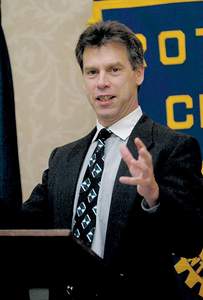
Joseph Oddo delivering speech during the
2006 campaign.
Transcript
of five minute News8TV taping.
Joe Oddo, Independent Candidate, US House of Representatives
Oct 6, 2006
A patriot must always be ready to defend his country from his government.
I’m Joe Oddo, Independent
Green candidate running for Congress and I encourage you to get involved. To run for office. To insist we be allowed in the
debates. To fix our democracy. And stop the mudslingin
I believe in expanding civic participation by fixing election rules and instituting universal
registration. Anyone that shows up at the right polling place with their official ID should be able to register and vote on
the spot.
Plus
we should expand the hours of Election Day, or make it a holiday so everyone can take off work to cast their vote.
Our team of Independents have
spent weeks out in all weather extremes to qualify to make the ballot. We talked to over 150,000 Virginians who understand
the need for Independent voices. And by listening to your concerns, we have formulated a sound platform that addresses diverse
issues like lobby reform and term limits.
Together with our statewide candidate for the US Senate Gail “for Rail” Parker, we propose Rail Now solutions.
More Trains Less Traffic. We need hi-speed Rail from Danville to Charlottesville, from Charlottesville to Richmond, and on
to Washington. Modern high-speed rail utilizes existing right-of-ways. We can run elevated rail right along I-64 and Rt. 29
with minimal disturbance. It is the time to develop alternative energy solutions, and end our dependence on oil.
We must pay closer attention
to how government spends OUR money, and to ensure that it is on realistic, long-term solutions. So one of our initiatives
is to solve the fiscal crises in our federal budget. We need a balanced budget now. We can to pay off the federal debt in
five years. And we can fix the tax code for real tax cuts, not credit card advances.
We are more conservative than our opponents. There
is nothing compassionate or conservative in military adventurism. This administration promotes addiction to a new drug called
fear. We no longer face facts. We prefer to fabricate them. We lost over 3,000 young American soldiers since Nine Eleven.
Why? For war industry profits.
Everyone knows it. One of every four tax dollars are being spent at the Defense Department. From their own report, billions
are being mismanaged through "improper payments". And this Congress has been complicit and needs replaced.
We can fix Pentagon waste
with an auditable accounting system so we know where our money is going. We can save $2 Billion a week by withdrawing from
Iraq. We can save Billions more by closing bases in Germany and Japan. And Billions more by scrapping useless weapons programs.
Now I ask you, what real liberal
or conservative would ever sanction the Patriot Act, or NSA domestic spying? Why should we give away rights guaranteed by
the Constitution now? They served us well for the multitude of threats we defeated during the last 230 years.
Now it’s: be afraid.
Be very afraid. Don’t worry about your tax dollars going to campaign contributors through no-bid contracts. Don’t
pay attention while they strip away our rights, or rob our Treasury blind.
We won’t hear them say: War as a foreign policy of the United
States is wrong. Peace is the answer. Nonviolence is the answer.
We can protest all we want. We can editorialize, we can lobby, we can strike, we can boycott,
we can hold endless numbers of meetings. This only gets us so far. If we are going to accomplish real change in government,
then we have to resort to action. The only real action against apathy is to get on the ballot and run for office.
Now is our chance to restore
the optimism and promise of a world for all to live in peace. Join us as an independent - not bought and paid for by corporate
rulers.
We run
on positive issues. We listen. We do not sling mud.
Because I am an optimist, I offer solutions that the two parties will not address. Please
Join us. Our Web site is www.VoteJoinRun.us. Please Vote Oddo on November 7th.